
What is SEO in Digital marketing? Learn what is SEO for beginners [2026] with this complete guide.
INTRODUCTION TO SEO
Ever wondered how some websites always show up first when you search on Google? That’s SEO doing its magic.
SEO (Search Engine Optimization) is basically how you make your website easier to find online. If you do it right, more people visit your site without you paying for ads.
Search Engine Optimization (SEO) is one of the most important pillars of digital marketing. It helps websites rank higher on search engines like Google, bringing in organic (free) traffic and increasing visibility. Whether you’re running a business, blog, or e-commerce site, SEO plays a key role in your online success.
WHAT IS SEO
SEO marketing, or search engine optimization marketing, is the technique of improving a website’s content and structure so that it will appear more often in search engine results, thereby creating more organic traffic and improving a website’s online exposure. It’s a long-term strategy that helps to attract more visitors to your page or website, generate more leads and sales, and build brand awareness.
SEO marketing serves as a strategic toolkit, with broad techniques such as keyword optimization content refinement, and link building. It is an essential practice for website owners aiming to boost visibility organically(non-paid) on search engines, ultimately attracting a targeted audience.
By understanding and implementing SEO marketing principles, businesses not only navigate the difficulties of search engine algorithms but also position themselves strategically to thrive in the competitive online environment.
IMPORTANCE OF SEO IN DIGITAL MARKETING
SEO (Search Engine Optimization) is one of the most important parts of digital marketing because it helps your website get found on search engines like Google without paying for ads.
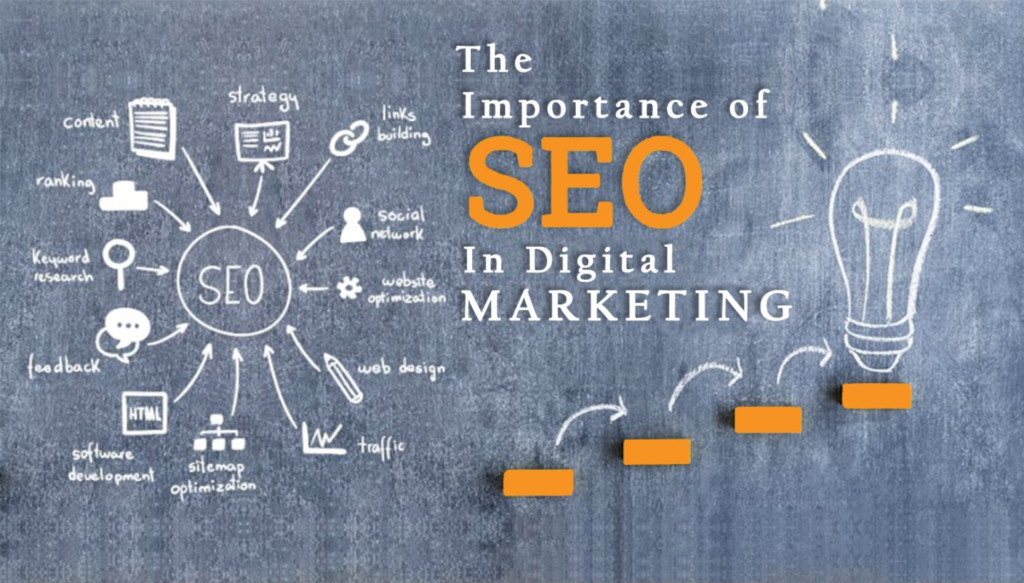
1. Brings Free (Organic) Traffic
SEO helps your website appear in search results naturally.
👉 This means you don’t have to spend money on ads to get visitors
2.Increase Website visibility
The higher your website ranks on Google, the more people will see it.
👉 Most users click only the first few results.
3. Builds Trust and Credibility
Websites that rank higher are often seen as more trustworthy.
👉 People believe: “If it’s on top, it must be good.
4. Improves User Experience
SEO is not just about keywords. It also focuses on:
- Fast loading speed
- Mobile-friendly design
- Easy navigation
👉 A better website experience keeps users engaged.
5. Supports Long-Term Growth
Unlike paid ads, SEO gives long-lasting results.
👉 One well-optimized page can bring traffic for months or even years.
6. Helps Target the Right Audience
SEO helps you reach people who are already searching for your product or service.
👉 Example: “best perfume for daily use”
7. Cost-Effective Marketing Strategy
SEO is one of the most affordable digital marketing strategies.
👉 You invest time and effort instead of continuous ad spending.
8. Boosts Brand Awareness
Even if users don’t click your website, seeing your brand in search results increases recognition.
9. Increases Conversions and Sales
When the right audience visits your website, the chances of sales increase.
👉 More relevant traffic = better conversion rate
10. Gives Competitive Advantage
If your competitors are using SEO and you’re not, they will get more traffic.
👉 Good SEO helps you stay ahead in the market.
TYPES OF SEO MARKETING
1. On-Page SEO
This is everything you do on your website to improve rankings.
What it includes:
- Keyword optimization (using the right search terms)
- Title tags & meta descriptions
- Headings (H1, H2, H3)
- High-quality content
- Internal linking
- Image optimization
Example: Writing a blog with proper keywords and clear headings.
2. Off-Page SEO
This is what you do outside your website to build trust and authority.
What it includes:
- Backlinks (links from other websites)
- Social media sharing
- Guest blogging
- Influencer mentions
Think of backlinks as “votes” from other websites.
3. Technical SEO
This focuses on the backend performance of your website.
What it includes:
- Website speed
- Mobile-friendliness
- Secure connection (HTTPS)
- XML sitemap
- Fixing broken links
A slow or broken site won’t rank well, even with good content.
4. Local SEO
This helps your business appear in location-based searches.
What it includes:
- Google Business Profile
- Local keywords (e.g., “perfume shop in Chennai”)
- Customer reviews
- Local listings
Important for shops, salons, restaurants, and local services.
5. E-commerce SEO
Used for online stores.
What it includes:
- Product page optimization
- Category pages
- Customer reviews
- Product keywords
Helps products rank in search results.
6. Content SEO
Focused on creating and optimizing valuable content.
What it includes:
- Blog writing
- Keyword-focused articles
- Content structure
- Regular updates
Good content = better rankings.
7. Mobile SEO
Optimizing your website for mobile users.
What it includes:
- Responsive design
- Fast loading on mobile
- Easy navigation
Most users browse on mobile, so this is very important.
8. Voice Search SEO
Optimizing for voice searches like:
“Hey Google, what is the best perfume?”
What it includes:
- Natural language keywords
- Question-based content
- Featured snippets
SEO STRATEGIES
SEO strategies are the steps you follow to improve your website’s ranking on search engines like Google and get more organic traffic.
1. Keyword Research (Start Here)
This is the foundation of SEO.
You need to find what people are searching for.
How to do it:
- Use tools like Google Keyword Planner and Ubersuggest
- Choose keywords with good search volume
- Focus on long-tail keywords (more specific phrases)
Example:
Instead of “perfume” → use “best long-lasting perfume for women”
2. Create High-Quality Content
Content is the most important part of SEO.
Your content should:
- Answer user questions
- Be easy to read
- Provide real value
Tip: Write for people first, then optimize for search engines.
3. On-Page Optimization
Make your content SEO-friendly.
Key elements:
- Use keywords in title and headings
- Write a strong meta description
- Use proper heading structure (H1, H2, H3)
- Add internal links
- Optimize images (alt text)
4. Technical SEO (Website Performance)
Your website must work smoothly.
Focus on:
- Fast loading speed
- Mobile-friendly design
- Secure site (HTTPS)
- Clean URLs
- Fix broken links
A slow website can hurt your rankings.
5. Build Backlinks (Off-Page SEO)
Backlinks are links from other websites to yours.
They act like “votes of trust.”
How to get them:
- Guest blogging
- Collaborations
- Sharing valuable content
6. Improve User Experience (UX)
Search engines like Google care about how users interact with your site.
Improve:
- Easy navigation
- Clean design
- Readable content
- Low bounce rate
7. Optimize for Mobile
Most users browse on mobile devices.
Make sure your site:
- Loads fast
- Looks good on all screen sizes
- Is easy to use
8. Use Analytics and Tracking
Track your performance and improve.
Tools:
- Google Analytics
- Google Search Console
Monitor traffic, clicks, and rankings.
9. Focus on Local SEO (If Applicable)
If you have a local business:
- Use location-based keywords
- Optimize Google Business Profile
- Collect customer reviews
10. Update Content Regularly
SEO is not one-time work.
Keep updating:
- Old blog posts
- Keywords
- Information
11. Optimize for Voice Search
People now search using voice.
Use:
- Natural language
- Question-based keywords
Example: “Which perfume lasts all day?”
12. Follow SEO Trends
Stay updated with changes in Google algorithms.
Current trends:
- AI search
- User experience focus
- E-E-A-T (trust & authority)
HOW DO SEARCH ENGINE ACTUALLY WORKS
1. Crawling (Finding Content)
Search engines use automated programs called crawlers or bots.
What they do:
- Visit web pages
- Follow links from one page to another
- Discover new and updated content
Example:
If you publish a new blog, these bots will “visit” your page to check it out.
2. Indexing (Storing Content)
After crawling, the search engine stores your page in a huge database called an index.
What gets stored:
- Text content
- Images
- Keywords
- Page structure
Important:
If your page is not indexed, it won’t appear in search results.
3. Ranking (Showing Results)
When someone searches for something, the search engine decides which pages to show first.
It ranks pages based on:
- Relevance to the search query
- Quality of content
- Website authority (backlinks)
- User experience (speed, mobile-friendly)
CONCLUSION
Search Engine Optimization (SEO) is a key part of digital marketing that helps your website become visible on search engines like Google. It works by improving your website so it can be easily found, understood, and ranked higher in search results.
By using the right SEO strategies—like keyword research, quality content, and a user-friendly website—you can attract more visitors without paying for ads. While SEO takes time, it provides long-term results, builds trust, and supports steady business growth.
In the end, SEO is not just about ranking first—it’s about delivering value to users and making your website easy to find and useful
Know more: What Is SEO Marketing ? Definition, Importance, Types and Benefits – GeeksforGeeks
Connect with: SERVICES – Yoshitha
FAQs
1. What is SEO in simple words?
SEO (Search Engine Optimization) is the process of improving a website so it appears higher in search results on Google and attracts more organic traffic
2. Why is SEO important in digital marketing?
SEO is important because it helps websites get free traffic, increases visibility, builds trust, and supports long-term growth without relying on paid ads.
3. How does SEO work?
SEO works in three steps:
- Crawling (search engines find your content)
- Indexing (store your content)
- Ranking (show the best results first)
4. What are the types of SEO?
The main types of SEO are:
- On-page SEO
- Off-page SEO
- Technical SEO
- Local SEO
5. What tools are used for SEO?
Popular SEO tools include:
- Google Analytics
- Google Search Console
- Ubersuggest
6. What are backlinks in SEO?
Backlinks are links from other websites to your site. They act as signals of trust and improve your ranking.